
Disguised monks at Sai Darbar
The Leela
Vijayanand, a Sanyasi from Madras, embarked on a holy pilgrimage to Manasarovar, driven by the desire to earn spiritual merit. He donned the ochre robes of renunciation, yet the true weight of that commitment remained unknown to him. As he began his journey, he encountered travelers who spoke of the treacherous path to Manasarovar—the freezing cold, the hostile terrain, the linguistic barriers, and the looming threat of death. His resolve, brittle as dry leaves, crumbled under the weight of fear. Abandoning the physical pilgrimage, he heard of the great Saint in Shirdi and decided to seek Sai Baba’s darshan instead.
Upon arriving in Shirdi, Vijayanand was enchanted by the devotional fervor of the place. However, Maya soon cast her net. He received a telegram stating his mother was on her deathbed. The attachment he claimed to have renounced came flooding back. He rushed to Dwarakamai to seek permission to leave. But Baba, the Omniscient One, saw not just the telegram, but the ticking clock of Vijayanand's own life. Instead of granting leave, Baba rebuked him for his fickleness and commanded him to stay at the Wada, instructing him to read the 'Bhagavat' for three weeks while keeping the 'doors and windows' tightly shut against thieves. Unbeknownst to the ascetic, Baba was preparing him for his own final journey, ensuring his consciousness remained elevated when the end came.
? The Conflict / Doubt
Can wearing the saffron robes of a Sanyasi truly grant liberation if the mind is still shackled by fear and attachment? Furthermore, why would a compassionate Saint like Baba prevent a son from visiting his dying mother?
The Revelation
-
The Facade of Renunciation: Baba exposed the hollowness of external renunciation when it lacks internal fortitude. Wearing the ochre robe entails a death of worldly attachments. If one still clings to family and fears physical hardships, the garb is merely a costume.
"You have stained this saffron garb. You have blemished the sanctity of the saffron robes. If you were so gripped by attachment and affection, why did you don this attire?"
-
The True Manasarovar: The transcript reveals that the physical Manasarovar is but a symbol. The true pilgrimage is internal—ascending the consciousness to the Sahasrara (the thousand-petalled lotus), where the lake of nectar drips eternally. This inner journey requires far greater resolve than the physical trek.
-
Closing the Doors and Windows: When Baba instructed Vijayanand to beware of "thieves" in the Wada and close the doors and windows, it was a profound spiritual allegory. The "thieves" are the distractions of the world; the "doors" are the mouth (taste) and genitals (lust); and the "windows" are the senses of sound, touch, and smell. Baba was commanding him to withdraw his senses (Pratyahara) to prepare for death.
-
Sadgati (Noble Progression): Though Vijayanand may not have attained total Moksha (Liberation) like the steadfast Balaram Mankar, Baba's intervention ensured his Sadgati. By keeping him in Shirdi and immersing him in scripture during his final moments, Baba purified his transition, ensuring his next birth would begin from a higher spiritual plane.
"If you err while being a householder, perhaps I may forgive you. But if you err while in ochre robes, then you shall be shattered."
Scriptural References
📖 Sai Satcharitra Chapter 31, Kabir Doha, Naradiya Bhakti Sutra
Watch the Discourse
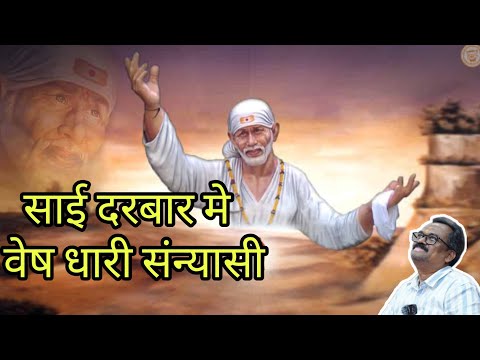
Vijayanand, a Sanyasi from Madras, embarked on a holy pilgrimage to Manasarovar, driven by the desire to earn spiritual merit. He donned the ochre robes of renunciation, yet the true weight of that co...
Leela Narration
Vijayanand, a Sanyasi from Madras, embarked on a holy pilgrimage to Manasarovar, driven by the desire to earn spiritual merit. He donned the ochre robes of renunciation, yet the true weight of that co...