
The Shield of Satsang: Why Baba Sent Shama with Mirikar
The Leela
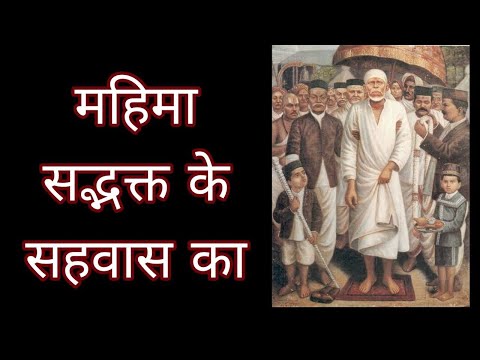
In Adhyay 22 of the Sai Satcharitra, we encounter the gripping tale of Balasaheb Mirikar (son of Kaka Saheb Mirikar), a Mamalatdar of Kopergaon. While traveling to Chitli for official work, he stopped at Shirdi to take Baba’s darshan. During their interaction, Baba suddenly asked a strange question: 'Do you know about the Lambu Maharaja (a long poisonous snake) and the effects of its poison?'
The gathering was puzzled, but as it was getting late, Mirikar prepared to leave. Baba, foreseeing an impending calamity, insisted that his close devotee, Madhavrao (Shama), accompany Mirikar. Mirikar hesitated, thinking, 'Why trouble Madhavrao unnecessarily for a short official trip?' Even Madhavrao was initially reluctant, but Baba’s command was absolute: 'Allah’s wish.' Sensing the gravity behind Baba’s words, Mirikar finally agreed, and they set off together.
Upon reaching Chitli, they stayed in a Hanuman Temple. Late at night, while Mirikar was reading a newspaper on his bed, a rustling sound broke the silence. A servant lifted a lantern, revealing a terrifying sight: a deadly snake was coiled right on Mirikar’s waist. The servant froze, whispering, 'Snake, snake.' Mirikar realized his life hung by a thread. In the ensuing chaos, servants rushed in with sticks and killed the snake, saving Mirikar’s life. Baba’s cryptic warning about 'Lambu Maharaja' had come true.
? The Conflict / Doubt
If the servants were the ones who killed the snake and physically saved Mirikar, why did Baba insist on sending Madhavrao (Shama)? Shama stood by surprised and did not kill the snake himself. What spiritual purpose did his company serve?
The Revelation
The significance of Madhavrao’s presence lies not in physical action, but in the spiritual authority of a true devotee.
- The Power of Prayer: When Shama saw the snake, he didn't just panic; he invoked Baba. The transcript highlights a crucial verse (Ch 22, Verse 84): "Shamrao hi chakit zale, mhanati Baba he kay kele..." (Even Shamrao was surprised and said, 'Baba, what have you done? Where did you send this unwanted calamity? Now you must resolve it').
- Intervention in Karma: Mirikar’s destiny (Karma) contained a severe calamity—endangerment to life. While Mirikar was a devotee, he lacked the intense, surrendered faith required to alter such deep-rooted karma. Shama, however, possessed total surrender.
- The Weight of Satsang: Baba sent Shama because he knew that the company (Satsang) of an ardent devotee acts as a shield. When a surrendered soul like Shama calls out, God is compelled to listen.
As the teaching explains:
"I am always under the control of my true devotees... at their one call I present myself without any delay."
- Conclusion: Baba utilized Shama’s presence as a catalyst. Shama’s single prayer—"Ata nirasaley pahije" (This must be removed now)—had the power to invoke Baba’s grace instantly, averting a tragedy that was otherwise written in Mirikar's fate. This Leela teaches us that if we lack intense devotion ourselves, simply keeping the company of those who do love God can save us from the worst of life's storms.
Scriptural References
📖 Sai Satcharitra Chapter 22 (Verses 65 & 84)
Watch the Discourse
In Adhyay 22 of the *Sai Satcharitra*, we encounter the gripping tale of Balasaheb Mirikar (son of Kaka Saheb Mirikar), a Mamalatdar of Kopergaon. While traveling to Chitli for official work, he stopp...
Leela Narration
In Adhyay 22 of the *Sai Satcharitra*, we encounter the gripping tale of Balasaheb Mirikar (son of Kaka Saheb Mirikar), a Mamalatdar of Kopergaon. While traveling to Chitli for official work, he stopp...