
The Living Statue: The Divine Descent of the Sai Satcharitra
The Leela
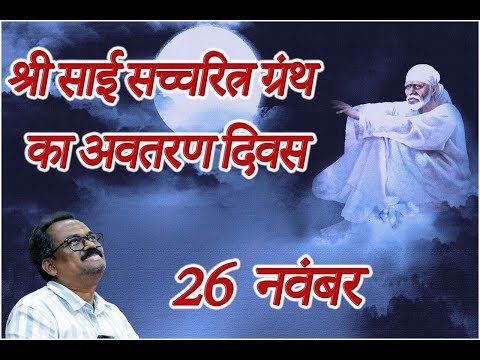
On the 26th of November, 1930, a divine phenomenon occurred that changed the course of devotion forever. It was not merely the publication of a book, but the descent of the Vāṅgmaya Mūrti—the Embodied Word of Sai. Years prior, when Hemadpant approached Baba in 1910 seeking permission to write His biography, Baba set a rigorous condition: the ego must be utterly annihilated. It took twelve years of spiritual cleansing before Baba fully descended into Hemadpant’s heart, turning the devotee into a mere pen. Interestingly, writing began in 1922—four years after Baba took Mahasamadhi—and concluded exactly eight years later, in 1930.
To understand the gravity of following the Guru's word over mere physical service, we look to the life of the saint Gondavlekar Maharaj. A simple farmer, who could visit the saint only once a year, was granted instant liberation. Seeing this, a close attendant who served the Maharaj day and night felt slighted. "I massage your feet and cook for you daily, yet he gets liberation?" the attendant cried. The Saint replied, "You serve Me, but you follow your own will. He visits rarely, but he lives entirely by My will." This illustrates the profound difference between physical proximity and spiritual obedience—a gap that the Sai Satcharitra bridges.
? The Conflict / Doubt
Many devotees view the Sai Satcharitra merely as a biography or a holy book to be read for information, believing that true worship happens only before an idol in a temple where they can petition for their personal desires.
The Revelation
The speaker reveals that the Sai Satcharitra is not just a book, but the living, breathing form of Sai Baba Himself—the Kalpavriksha (wish-fulfilling tree) for the devotee.
- The Eight-Year-Old Incarnation: In Chapter 43, Baba promised to return as an eight-year-old child. This refers not to a physical boy, but to the Sai Satcharitra itself, which took exactly eight years (1922–1930) to be completed and placed in our hands.
- His Will vs. Your Will: When standing before an idol in a temple, we often impose our will upon God ("Baba, do this," "Don't do that"). However, when we read the Satcharitra, we silence our demands and allow Baba's will to operate on us. To know His command, one must read His Word.
- The True Temple: Just as the Golden Temple in Amritsar houses the Guru Granth Sahib as the living Guru, Baba declared,
"Do not call My temples temples. Call this scripture My true temple—My real memorial."
- The Essence of Pārāyaṇa: Reading is not merely skimming for information. True Pārāyaṇa means total immersion—eating, drinking, and breathing the scripture for seven days, cutting off all ties with the world to allow the Guru to rewrite one's inner state.
Scriptural References
📖 Shri Sai Satcharitra: Chapter 21, Chapter 27 (v.56), Chapter 35, Chapter 43, Chapter 45 (v.9), Chapter 53 (v.171-172).
Watch the Discourse
On the 26th of November, 1930, a divine phenomenon occurred that changed the course of devotion forever. It was not merely the publication of a book, but the descent of the *Vāṅgmaya Mūrti*—the Embodi...
Leela Narration
On the 26th of November, 1930, a divine phenomenon occurred that changed the course of devotion forever. It was not merely the publication of a book, but the descent of the *Vāṅgmaya Mūrti*—the Embodi...