
The Living Word: Celebrating the Divine Descent of Shri Sai Satcharitra
The Leela
On November 26, 1930, a divine event occurred that changed the spiritual landscape for Sai devotees forever—the completion and descent of the Shri Sai Satcharitra. This was not merely the publication of a biography; it was the reincarnation of Sai Baba in the form of words, His Vāṅgmaya Mūrti.
Decades earlier, in 1910, when Hemadpant approached Baba with the desire to write His life story, Baba imposed a strict condition: "First surrender your ego at My feet. Make your sense of doership absolutely zero." It took twelve years of spiritual cleansing to hollow Hemadpant out completely. Only in 1922, four years after Baba’s physical Mahasamadhi, did the divine inspiration begin to flow, using Hemadpant merely as a pen. Over the next eight years, the scripture manifested chapter by chapter, culminating on this sacred date.
To illustrate why this specific text is vital, the speaker shares the story of a devotee of Gondavlekar Maharaj. A simple farmer, who visited the saint only once a year but lived entirely by the Guru's command, was granted instant liberation. In contrast, a personal attendant who served the Master day and night for twelve years—massaging His feet and cooking His meals—remained spiritually empty. Why? Because the attendant served according to his own will, while the farmer surrendered to the Guru's will. The Sai Satcharitra, the speaker explains, is the only way to know Baba's will, transforming us from transactional worshippers into true disciples.
? The Conflict / Doubt
Why is the Sai Satcharitra considered the "King of Scriptures" when countless other books and biographies about Sai Baba exist? Is it simply a historical record of a saint's life, or does it possess a living potency that distinguishes it from ordinary literature? The central conflict is between viewing Baba as a deity who fulfills our personal desires versus recognizing Him as a Sadguru whose will we must learn to obey.
The Revelation
The discourse reveals that the Sai Satcharitra is not a book but the living, breathing presence of Sai Baba Himself. It is the "True Temple" where His will resides.
- The Eight-Year-Old Incarnation: In Chapter 43, Baba promised to return as an eight-year-old child. The speaker profoundly interprets this as the Sai Satcharitra itself, which took exactly eight years (1922–1930) to be written and placed in the hands of devotees.
- Vāṅgmaya Mūrti (Embodied Word): Just as the Golden Temple enshrines the Guru Granth Sahib as the living Guru, the Sai Satcharitra replaces the physical idol. Baba declares in Chapter 53, "Call this scripture My true temple... If My true temple exists anywhere, it is the Sai Satcharitra."
- Information vs. Transformation: Other books provide information and can be read casually. This scripture demands Pārāyaṇa—a state of total immersion where the devotee disconnects from the world for seven days to "eat, drink, and breathe" the text, allowing Baba's will to overwrite their own.
- The Shift in Will: When we pray before an idol, we often impose our will ("Baba, please do this"). When we read the Satcharitra, we submit to His will. True discipleship begins only when we stop giving orders to God and start listening to His commands through His scripture.
"When My incarnational work is complete, this physical body will no longer be before you... At that time, remember—this very scripture alone is My Vāṅgmaya Mūrti. It is My true and real form."
Scriptural References
📖 Sai Satcharitra Chapters 21, 27, 35, 43, 45, 53
Watch the Discourse
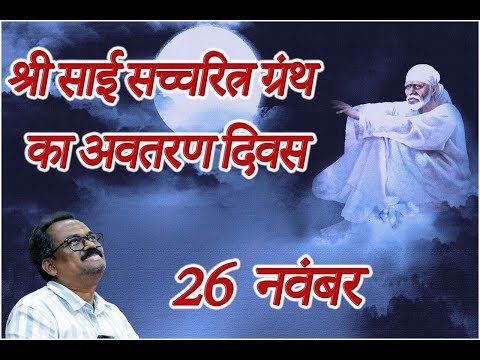
On November 26, 1930, a divine event occurred that changed the spiritual landscape for Sai devotees forever—the completion and descent of the *Shri Sai Satcharitra*. This was not merely the publicatio...
Leela Narration
On November 26, 1930, a divine event occurred that changed the spiritual landscape for Sai devotees forever—the completion and descent of the *Shri Sai Satcharitra*. This was not merely the publicatio...